
The surge in volatility across the globe sparked by Russian invasion of Ukraine has led to an increase in prices of gold and silver - considered to be safe-haven investment bets. In the past month, silver funds have delivered returns of 7.34 per cent, while gold funds on an average have risen around 6 per cent. In comparison, the benchmark Nifty has declined 4 per cent. Fund managers say precious commodities act as a good hedge against inflation and phases of geopolitical uncertainty.

Mutual fund (MF) houses have started realigning their overseas product offerings after the Securities and Exchange Board of India (Sebi) advised them to stop subscriptions. PPFAS Asset Management has decided to suspend transactions in Parag Parikh Flexi Cap Fund with effect from February 2, 2022. Though new lump-sum and systematic investment plans (SIPs) will not be accepted, existing SIPs and systematic transfer plans (STPs) will continue.

Systematic investment plans (SIPs) of mutual funds (MFs) have seen a spike in demand with new registrations touching a five-year high already this year. Around 19.5 million new SIPs have been registered till December end, as against 14.1 million in the whole of financial year 2020-21 (FY21). Market participants say increasing investor awareness and positive experiences have spurred this increase.

'We would advise investors to invest in a disciplined way in equities for the long term.'

Neelesh Surana, who manages Mirae Asset Tax Saver and Mirae Asset Emerging Bluechip, remains constructive on Indian equities from a three to five-year time frame.

Start-ups Zomato, PB Fintech, One97 Communications, and FSN E-Commerce Ventures have entered the large-cap category after the latest reclassification exercise by the Association of Mutual funds in India (Amfi). This comes despite stocks such as PB Fintech (Policybazaar) and One 97 Communication (Paytm) trading below their issue price. Others such as Mindtree, SRF, IRCTC, Tata Power, JSW Energy have been moved from mid-cap to large-cap category.

Strong performance by technology (tech) stocks in the current year has led to superior returns in information technology (IT) sector funds. On average, tech funds have given returns of 63.53 per cent in the past one year, the highest among all categories of funds, reveals the data from Value Research. Market participants say that Covid-19 has accelerated the growth of IT companies with rise in demand for digitisation.

'At current valuations, we believe large-caps offer better downside support.' 'Hence, we are suggesting a small tilt towards them.'

New fund offers collection in the current calendar year was the highest in a decade, with 13 of the 70 equity schemes cornering 75 per cent of the amount raised.

L&T Housing Finance on Thursday announced selling L&T Investment Management (LTIM) to HSBC Asset Management (India) at $425 million. LTIM is the investment manager of the mutual fund business of L&T. The divestment of the mutual fund business is in line with the strategic objective of L&T Finance Holdings of unlocking value from its subsidiaries to strengthen its balance sheet, it stated in a press release. The data from the Association of Mutual Funds in India (Amfi) shows L&T Mutual Fund (MF) has average assets under management (AAUM) worth Rs 78,273.80 crore, while HSBC MF has AAUM of Rs 11,314.32 crore as in the July-September quarter.

The global semiconductor shortage is turning into a headache for automotive (auto) and appliance manufacturers. But it is proving to be a boon for equity investors. Semiconductor stocks are among the best performers this year. The PHLX Semiconductor Index has gained more than 35 per cent year-to-date.

'Just because you don't see them does not mean they don't exist.' 'The greatest risk is overconfidence.
The one-year returns for equity-oriented mutual fund (MFs) schemes have largely mirrored the gains made in the secondary market. However, schemes that invest in infrastructure (infra), small-cap, and public sector undertaking (PSU) banks have emerged standout performers, with gains in excess of 100 per cent in some cases. Of the total 484 equity schemes, 353 have managed to beat the Sensex, reveals the data provided by Value Research. Around 20 have delivered returns in excess of 90 per cent and six schemes have given returns of over 100 per cent in the past one year. The S&P BSE Sensex Total Return Index (TRI) has given returns of 51 per cent in the last one year, ended October 29.
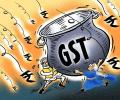
'We have already given Rs 1.59 trillion to states.' 'So, there is no question of giving them more.'

Securities and Exchange Board of India (Sebi) has tweaked the benchmarking norms for mutual fund (MF) schemes in a bid to bring more uniformity. The regulator has introduced a two-tiered structure for benchmarking of schemes and all the benchmarks followed should be total return index (TRI). According to the circular, the first-tier benchmark shall be reflective of the category of the scheme, and the second-tier benchmark should be demonstrative of the fund manager's investment style or strategy within the category.

The central government is likely to exceed the budgeted tax collection target of Rs 22.2 trillion for the current fiscal year, led by better indirect tax mop-up, compliance measures, and recovery in most sectors following the second wave of the Covid pandemic. Personal income and corporate tax collections (net of refunds) grew 74 per cent to Rs 5.70 trillion in the first half of the current financial year, driven mainly by advance tax and TDS payments. The target for the current fiscal year is Rs 11.08 trillion; higher taxes are paid usually towards the end of a fiscal year.

While Panama and Paradise Papers had majorly focused on foreign entities created by entities, corporates or individuals overseas, Pandora is about the new method adopted by wealthy elites by setting up multiple layered complex trust structures.

Amit Shah's net worth grew 32 per cent to Rs 37.91 crore, mainly due to 80 per cent appreciation in the market value of his securities.

Infrastructure funds, which bet on stocks closely linked with infrastructure development in the country, have emerged as one of the best-performing categories over the past year. They have generated an average return of 90.63 per cent - the third-best, after technology funds and small-cap funds. Of the 21 schemes in the category, seven have given a return of more than 100 per cent in a year.
Domestic investors have been increasingly investing in overseas stocks in a bid to diversify their portfolio. US stocks are the favourite for individual investors, though they have been increasingly looking at Chinese equities given the relatively attractive valuations. However, the regulatory crackdown in China and the latest concerns around Evergrande default have resulted in sub-par returns for investors. Edelweiss Greater China Equity Off-shore Fund and Axis Greater China Equity Fund of Fund are down 11 per cent in the past three months, the data from Value Research shows.
 © 2026 Rediff.com - Investor Information - Advertise with us - Disclaimer - Privacy Policy - Sitemap - Feedback - About us - Terms of use - Grievances